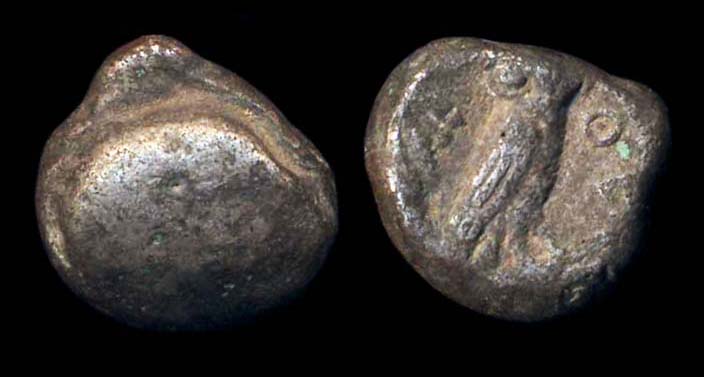
DescriptionFor about two centuries the Athenial tetradrachms with head of Athena and an owl were the standard trade coin of the Mediterranean. Just over the edges of the culture complex people would make imitiations of the main money. Anything was better than nothing.Gaza was a favorable spot on the overland route from Palestine to Egypt, a good place to stock and hire guards before crossing lawless Sinai. The people called Philistines in the Bible may or may not have been the original humans in the region. The Hebrews officially didn’t like them because they were fond of human sacrifice and pig meat. Most of the neighbors of the ancient Hebrews were like that.In ancient times Arabia was generally considered to be what is now Jordan and southern Israel. To the Mediterraneans Arabia proper was considered a wilderness with some exotic cities in Yemen. The population of Arabs was increasing, and they became dominant in Jordan during Roman times. The Romans occupied northern “Arabia” for a few centuries, but never made a move on the peninsula.“Ancient Coins” includes Greek and Roman coins and those of neighbors and successors, geographically from Morocco and Spain all the way to Afghanistan. Date ranges for these begin with the world’s earliest coins of the 8th century BC to, in an extreme case, the end of Byzantine Empire, 1453 AD.