
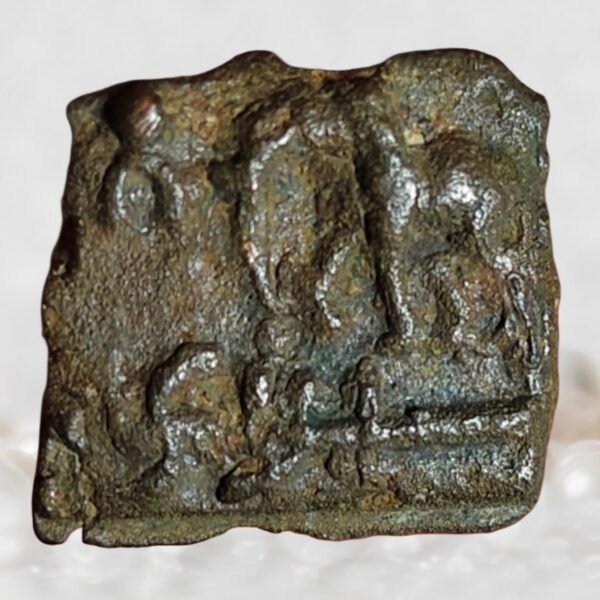
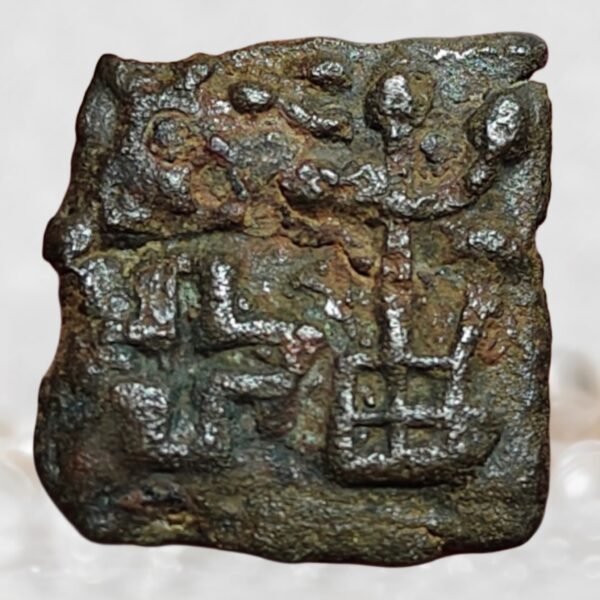
Ancient India Post-Mauryan Shunga Empire (185-73 BCE) Copper Coin
$ 10.39
Ancient India, Post-Mauryan, The Shunga Empire (185 BCE -73 BCE), Cast Copper Coin, Composition: Copper, Denomination: 1/4 Karshapana, Weight: 2.93 grams, Diameter: 15.54×14.88 mm, References: Mitch AC# 4381, about very fine, very scarce Obverse: Elephant to left, Indra-dhwaja, Taurine & Swastika Reverse: 3-arched Chaitya/stupa surmounted with a crescent on top, Hollow cross, Taurine, Tree-in-railing The Shunga Empire (c. 185 BCE -73 BCE) rose after the decline of the Mauryan dynasty, founded by Pushyamitra Sunga, a former Mauryan general. Centered in Pataliputra and later Vidisha, the Shungas ruled much of northern and central India. They are remembered for reviving Brahmanical traditions, patronizing art, and resisting foreign invasions, especially Indo-Greeks. The period witnessed growth in trade, culture, and learning, with major contributions to sculpture at Bharhut and Sanchi. Shunga coinage mainly consisted of cast copper coins, often square or round, bearing symbols like trees, animals, and geometric designs rather than portraits. The 1/4 Karshapana copper coin (2.92 g, 15 mm) represents their simple yet significant monetary system, reflecting both continuity of Mauryan traditions and regional artistic expression.
Relaterade produkter
-
 BAJO ELECTRICO IBANEZ SR505E BMLägg till i varukorg
-
 BAJO ELECTRICO IBANEZ SR506E BMLägg till i varukorg
-
BAJO ELECTRICO IBANEZ SR505E BABVälj alternativ
Den här produkten har flera varianter. De olika alternativen kan väljas på produktsidan